
 All vikis
Civilization: Beyond Earth
Release details: Steam
Civilization: Beyond Earth had 327 players on Steam at 3:34 AM Dubai time on Nov 28, 2026, 0.4% of its launch peak of 86,892. The Collection with Rising Tide is $11.99 until Dec 3, cheaper than the base game alone at $39.99. A tier by our spin-off rule, a B in our view.
Civilization: Beyond Earth, Firaxis's 2014 science fiction Civilization, had 327 people playing on Steam at 3:34 AM Dubai time on Nov 28, 2026. That is 0.4% of the 86,892 who played at once at its launch in October 2014, 4,418 days after 2K released it on Oct 24, 2014. The cheapest way to own it today is not the base game: The Collection, which adds the Rising Tide expansion and a map pack, is $11.99 on Steam until Dec 3, 2026 (80% off $59.99), while the base game alone is back at its full $39.99. Steam's players are split on it: 58% of its 10,083 English-language reviews are positive, against a Metascore of 81. We rate Civilization: Beyond Earth A tier by the rule Civilization Spin-Offs sets for every spin-off, the Metascore, and we think it plays like a B: worth $11.99 with Rising Tide, not worth $39.99 without it. In the clip, from Firaxis's 2014 Inside Look, its designers say how it differs from Civilization 5 from the first turn.
We think Firaxis announces no sequel, remaster or new content for Beyond Earth before the end of 2027. The studio laid off about a third of its staff on Nov 17, 2026, and its stated plan for 2027 is Civilization 7's Atomic Age update and the Earthrise expansion, as 2K's anniversary post sets out.
Confidence: Likely. Check by: Dec 2027.
What it costs today
US prices on Steam, read on Nov 28, 2026. The sums and percentages are ours.
| What | Today | Note |
|---|---|---|
| The Collection: base game, Rising Tide, Exoplanets Map Pack | $11.99 | 80% off $59.99; Steam's page says the offer ends Dec 3 |
| Beyond Earth, base game | $39.99 | No discount today; it was $9.99 when we read it on Nov 15, 2026 |
| Rising Tide | $29.99 | The same price as on its release day in 2015 |
| Exoplanets Map Pack | $2.99 | Six maps |
| The three bought one by one | $72.97 | The Collection today is 84% less |
| Starships and Beyond Earth bundle | $49.99 | Adds Sid Meier's Starships, which is $14.99 alone |
Buy The Collection or wait. At $11.99 it costs $28.00 less than the base game it contains, and the base game without Rising Tide is the version most of the complaints are about. The list price has come down once: 2K launched Beyond Earth at $49.99, so today's $39.99 is 20% lower, while Rising Tide has never moved from its launch $29.99. It is not sold on GOG, whose catalog has no entry for it. Steam lists it for Windows, macOS and Linux, with Steam Workshop mods, Steam Cloud and multiplayer for up to 8.
Who is playing
SteamDB's charts and steamcharts.com, read on Nov 28, 2026 between 3:25 and 3:34 AM Dubai time. The shares and ratios are ours.
| Measure | Figure | What it means |
|---|---|---|
| Playing at 3:34 AM Dubai time | 327 | 0.4% of the all-time peak |
| 24-hour peak | 427 | |
| Average, last 30 days | 282 | 1.0% of October 2014's average of 28,464 |
| All-time peak | 86,892 | Launch weekend, October 2014 (steamcharts.com, which samples less often, has 86,747) |
| Average, November 2014 | 10,328 | Down 64% one month after launch |
| Peak, August 2015 | 18,202 | A free weekend, Aug 13 to 17 |
| Peak, October 2015 | 13,459 | Rising Tide's release month: 15% of the launch peak |
| Civilization 5 at the same reading | 13,872 | 42 players for every one in Beyond Earth |
| Alpha Centauri at the same reading | 51 | Steam only; the game is also sold on GOG |
Two things stand out. Beyond Earth opened big: its launch peak is higher than the one Civilization 7 reached in 2025, a comparison Civilization Steam Player Counts carries game by game. It then lost two thirds of its average players in a month. And the free weekend of August 2015 drew a higher peak (18,202) than the expansion that weekend was advertising (13,459), which says more people were willing to try Beyond Earth again than to pay for more of it.
What Beyond Earth is
| Released | Oct 24, 2014 worldwide for Windows, by 2K's launch release; Steam's page dates it Oct 23, 2014 |
| Mac and Linux | By Aspyr, which 2K's release promised for "this holiday season" of 2014; both are on Steam today |
| Developer and publisher | Firaxis Games and 2K |
| Revealed | Apr 12, 2014 at PAX East, the day the official announce trailer went up |
| Launch price | $49.99 |
| Rating | ESRB Everyone 10+ |
| Expansion | Rising Tide, Oct 9, 2015, $29.99 |
| Related game | Sid Meier's Starships, Mar 12, 2015 |
Beyond Earth takes the ending of an ordinary Civilization game, the colony ship leaving for another star, and starts there. An event the fiction calls the Great Mistake has wrecked the old nations; the survivors regroup into new blocs, and each sends an expedition to an alien planet. You land one colony, and from then on it is Civilization: found cities, work the land, research, trade, fight, and try to win before a rival does.
Sid Meier put the pitch in one line in 2K's launch release: unlike its predecessors, the game is not bound by history. That freedom is the whole design. Where a historical Civilization can lean on the player already knowing what gunpowder or a railroad is for, Beyond Earth has to teach an invented future, and how well it does that is the argument reviewers and players have had about it since.
How it differs from Civilization 5
Beyond Earth is built on the rules of Civilization 5: hexes, one military unit per tile, cities that bombard. PC Gamer's review said that the likeness hides how new it is; many players concluded the reverse. The table is what actually changed.
| System | Civilization 5 | Beyond Earth |
|---|---|---|
| Research | A technology tree, left to right through history | A technology web: start in the middle, research outward in any direction |
| Identity | Ideologies arrive late, in the Brave New World expansion | Three affinities (Harmony, Purity, Supremacy) grow all game and reshape units and cities |
| Who you play | A historical civilization with its leader | A sponsor, then three more picks: colonists, spacecraft and cargo |
| The wild map | Barbarians, hostile on sight | Alien life that mostly leaves you alone until provoked, and miasma that hurts units |
| Above the map | Nothing | An orbital layer for satellites |
| Story | None | Quests with choices |
| Culture | Social policies | Virtues, bought with culture |
| Mood of the people | Happiness | Health |
| Winning | Domination, science, culture, diplomacy, time | Domination, Contact, and one victory per affinity |
Affinities: Harmony, Purity, Supremacy
The affinities are three answers to one question: what should people become on a planet that was not made for them? Co-lead designer Will Miller sets them out here in Firaxis's gameplay walkthrough of July 2014.
- Harmony adapts humans to the planet through genetics. Its units ride and resemble the alien life, and IGN's review notes that it makes them immune to miasma and later lets them heal in it.
- Purity keeps humans as they are and remakes the planet into a second Earth.
- Supremacy makes humans independent of any planet through cybernetics and machines.
You earn affinity levels mostly by researching the technologies that carry an affinity's icon, and also from quests, ruins and resource pods. Higher levels upgrade every unit of a type at once, change how your soldiers and buildings look, and unlock the affinity's unique units and its victory. Each affinity also leans on a special resource of its own; Supremacy's is firaxite, as the walkthrough says.
Firaxis's "Master Control" gameplay video is the Purity case made in the game's own voice: terrascapes that let Earth life grow, and no cybernetics or alien genes.
We think affinities are the best idea in Beyond Earth, and the one later Civilization games should have taken further. An army that visibly becomes something else over 200 turns gives a game a shape that a list of eras does not.
The technology web
Firaxis called the web the most fundamental change. You begin at its center and research outward toward more exotic science; main technologies branch into smaller "leaf" technologies, and the web is too large to finish in one game. Two colonies on the same map can end with very different sets of tools, which is the point.
The cost is legibility. On a historical tree, anyone can guess what Bronze Working leads to. On the web, nothing in a name like Surrogacy or Protogenetics (the two IGN's reviewer picked out as hard to tell apart) says what it is for, so a first game is spent reading tooltips. Once you know it, the web has a best road, as every tree does: see the Apollo tips below.
Sponsors and the seeded start
Before turn one you make four choices where Civilization 5 has one: a sponsor (eight in the base game, twelve with Rising Tide), your colonists, your spacecraft and your cargo. Each gives a small permanent or starting bonus, so the same sponsor can open in dozens of ways. In this 2014 video on the Freedom! channel, George Vanous gives the four picks he used to win on Apollo, the hardest difficulty: Polystralia for two extra trade routes in the capital, Artists for culture and health, the Tectonic Scanner to see petroleum, geothermal and titanium before researching them, and Machinery for a free worker.
The eight base sponsors are the American Reclamation Corporation, the Pan-Asian Cooperative, Franco-Iberia, the Slavic Federation, Polystralia, the Kavithan Protectorate, Brasilia and the People's African Union. Their leaders speak mixtures of languages, a detail Firaxis's designers explain in the Inside Look as a way of showing the migrations after the Great Mistake without narrating them.
Aliens and miasma
The planet is not empty. Nests spawn alien life, from small ranged creatures to the siege worm, which wrecks tile improvements by crossing them and is too strong for one early unit. Unlike barbarians, aliens are not at war with you by default: explorers can usually walk past them, and attacking them makes the rest more hostile. Miasma, a gas that lies on tiles, is a hazard to your units until you clear it, which some satellites can do, or follow Harmony far enough to stop caring.
The orbital layer
Satellites sit on a second map above the first. Each covers a patch of tiles while it stays in orbit and gives a military, economic or scientific effect: combat bonuses and healing for units below, extra energy, miasma cleared, or, late in the game, bombardment from orbit. Ranged units can shoot them down. In the walkthrough a tactical satellite supports an attack on a rival's city.
Quests
Quests are short story tasks that end in a decision and a reward. In the walkthrough, finishing one called Gifts from Home brings a choice between two gains, and building a spy agency starts another that sends an agent into a rival's city. 2K's launch release describes them as side missions that help with resources and unit upgrades; Firaxis's stated aim was to add context to a story the player's own actions still write.
Five ways to win
There are five victories, and at most three are open to one colony at a time, as IGN's review counts them:
| Victory | Who can win it | How |
|---|---|---|
| Domination | Anyone | Capture every rival's capital |
| Contact | Anyone | Research your way to contact with an intelligent alien species |
| Promised Land | Purity | Build the Exodus Gate and settle the colonists from Earth who come through it |
| Emancipation | Supremacy | Build the Emancipation Gate and send your units through it to Earth |
| Transcendence | Harmony | Build the Mind Flower and keep it alive until it joins your people to the planet's consciousness |
The three affinity victories share a shape taken from the old space race: build a structure on the map, complete a second task, and defend it while rivals try to destroy it. In the clip, Vanous calls the Purity victory "pretty easy" once the affinity reaches level 13: build the Exodus Gate.
Tips from a 2014 run on Apollo
The Freedom! channel published a short "Master Edition" series in the three weeks after launch, and it is a record of how the launch version was beaten on its hardest setting. (Vanous calls the game "Civilization 6" throughout: it was the sixth Civilization he had played, two years before the real Civilization 6.)
- Place cities for resources. At least five resources within three tiles, one of them firaxite, petroleum or floatstone, and titanium if you can get it, because a mine on titanium was worth 5 production. Build three explorers before the first colonist.
- Research toward academies first. Take the science virtues, go through the web to the academy improvement, and build academies around every city. He counts 5 science from each with the matching virtue.
- Stop at four cities, then take capitals. Link your own cities with trade routes, annex captured capitals, and let health fall as low as minus 19 while you catch up with biofarms, clinics and pharmalabs.
- His verdict. On Nov 12, 2014, 19 days after launch, he says he has won on Apollo in every way and will stop playing until the game is made harder.
That last clip is, we think, as honest a review of the launch version as any: a game whose hardest difficulty one strategy could beat within three weeks. The numbers in these tips are the launch build's and may not match the patched game or Rising Tide.
Rising Tide (2015)
Rising Tide came out on Oct 9, 2015, 350 days after the base game, at $29.99 for Windows, Mac and Linux on the same day. It needs the base game. What it added, from 2K's release:
- Ocean cities. Floating settlements, resources under the sea, sea aliens, and amphibious explorers and colonists. This is the first Civilization in which a city can be founded on water, as the featurette here says.
- Four sponsors: Al Falah, the North Sea Alliance, INTEGR and Chungsu, for twelve in all.
- A new diplomacy system. Leaders gain traits during the game, you spend Diplomatic Capital on your own traits and on agreements, and two visible numbers, Fear and Respect, replace the hidden attitudes of the base game.
- Hybrid affinities. Investing in two affinities at once unlocks its own units and upgrades, where the base game rewarded only specializing.
- Artifacts, collected from the map and combined for perks, buildings and Wonders.
- Two biomes, Primordial (volcanic) and Frigid (ice), with alien life that differs by biome, and Marvels, large terrain features with quests.
The diplomacy featurette shows the trait and agreement screens. The hybrid affinities featurette goes through the three pairings: Harmony with Purity, Purity with Supremacy, and Harmony with Supremacy.
2K's own release admitted what the expansion was for. Its marketing chief said Firaxis had spent the year since launch "reviewing and implementing community feedback", and Sid Meier said fans would see much of their feedback in it. Reviewers agreed about the direction and not about the distance: PC Gamer's Rising Tide review scored it 73, against 87 for the base game, and judged that it fixed the right problems while staying tied to the base game's choices. Players were kinder to the expansion than to the game: 79% of its 584 Steam reviews are positive, 21 points above the base game's share.
We think Rising Tide is the game Beyond Earth should have launched as, and that nobody should play without it. Hybrid affinities alone remove the base game's worst habit, which was that the three affinity routes never mixed.
Sid Meier's Starships and how the two games connect
Sid Meier's Starships, a small fleet combat game, followed on Mar 12, 2015 for PC, Mac and iPad, 139 days after Beyond Earth. Steam's page sets it in the Beyond Earth universe "after the age of the Seeding", and Take-Two's fiscal 2015 results describe "cross-connectivity and unlockable bonuses" between the two.
The link works through a 2K account, as Firaxis's own livestream shows here. In Beyond Earth, a "Play in Starships" option uploads a saved game: its sponsors, their affinities, and who is at war or at peace with you. A new Starships campaign can then start from that, set centuries later, with the wars and peaces carried over and everyone else neutral. On the same stream, Firaxis reads out what players had chosen so far: 45% of Starships games started as Supremacy, 33% as Purity and 22% as Harmony, and the Pan-Asian Cooperative was the most picked sponsor in Beyond Earth.
We have not tested whether the upload still works in 2026, and we would not buy Starships for it. Starships holds a Metascore of 64, 49% of its 1,969 Steam reviews are positive, and Civilization Spin-Offs rates it C.
Reception
Read on Nov 28, 2026.
| Measure | Beyond Earth | Rising Tide |
|---|---|---|
| Metascore | 81 from 78 critics | 79 from 39 |
| Metacritic user score | 5.6 from 1,098 ratings | 6.1 from 135 |
| Steam reviews, English | 58% of 10,083, "Mixed" | 79% of 584, "Mostly Positive" |
| Steam reviews, last 30 days | 50% of 24 | |
| PC Gamer | 87 | 73 |
| IGN | 7.9 |
Critics liked it more than players did, by 23 points if you set the Metascore beside the Steam share. On Civilization Games Ranked only Civilization 7 has a wider gap, at 28. The pattern is the same in both cases: reviewers scored the new ideas after a few games, and players who stayed for a hundred hours found the parts that did not hold up. For Beyond Earth, going by PC Gamer's Rising Tide review and the Apollo tips above, those were rival leaders with little character and an AI that one strategy could beat. IGN's verdict at launch was already close to where players ended up: a set of interesting experiments, and nowhere near the strongest game in the series.
Before launch it had looked like a sure thing. 2K counted more than 15 awards from E3 2014, among them the Game Critics Awards' Best Strategy Game.
Beyond Earth against Alpha Centauri
Every review of Beyond Earth measured it against Sid Meier's Alpha Centauri, the science fiction Civilization that Firaxis made in 1999 when it did not hold the Civilization name. PC Gamer's review called Beyond Earth its spiritual successor and warned that anyone wanting a direct sequel would be disappointed. Read on Nov 28, 2026:
| Alpha Centauri (1999) | Beyond Earth (2014) | |
|---|---|---|
| Metascore | 92 from 19 critics | 81 from 78 |
| Metacritic user score | 8.4 | 5.6 |
| Steam reviews | 90% of 618 | 58% of 10,083 |
| Price on Steam today | $0.99 with Alien Crossfire (80% off $4.99, until Dec 3) | $11.99 with Rising Tide (80% off) |
| On Steam at 3:34 AM Dubai time | 51 | 327 |
| Publisher | Electronic Arts | 2K |
| Factions | Seven, each an ideology with a leader who argues for it | Eight sponsors, each a region of Earth |
| Our tier on Civilization Spin-Offs | S | A |
The scores say Alpha Centauri is the better game, and we agree. The difference is where the science fiction lives. Alpha Centauri's factions are philosophies, so every treaty and every war is an argument about what the colony is for, and the planet itself becomes a character. Beyond Earth moved the philosophy out of the leaders and into the affinities, which any sponsor can take; we think that made for better army design and flatter leaders. Rising Tide's traits were Firaxis's attempt to put the character back.
Beyond Earth is the better game to actually operate in 2026: hexes, one unit per tile, a modern interface, Steam Workshop, eight-player multiplayer and Linux and Mac versions, where Steam sells Alpha Centauri for Windows only. More people are playing it, six for every one in Alpha Centauri on Steam, though Alpha Centauri's count leaves out GOG. If you want the best science fiction 4X writing, spend the $0.99. If you want Civilization 5 on another planet, spend the $11.99.
Is it worth playing in 2026?
We think yes, at the Collection's sale price, for one kind of player: someone who knows Civilization 5 well and wants a different map to solve with the same hands. For that player Beyond Earth with Rising Tide is 30 or 40 good hours. The affinities, the web and the ocean cities are real ideas, and no Civilization since has tried anything like them.
We think no for three others. If you want a game to live in for years, Civilization 5 has 42 times the players, and our editors' own choice is still Civilization 4. If you want science fiction with a point of view, Alpha Centauri is better and costs a dollar. And if the only price on offer is the base game at $39.99, wait: it was $9.99 thirteen days ago.
Steam lists Windows Vista SP2 and Windows 7 as its supported systems, and nothing newer. We did not test it on Windows 11; recent Steam reviews are split, 12 positive of 24 in the last 30 days.
How we rate
Beyond Earth is a spin-off, so its tier comes from the rule on Civilization Spin-Offs: the Metascore on the platform with the most critic reviews, with one tier lost if no official store sells the game. An 81 that is on sale today is A tier, and Rising Tide's 79 is B.
We do not apply the rule for the numbered games here, but the arithmetic is worth seeing. That rule, owned by Civilization Games Ranked, averages the Metascore with the English-language Steam review share. For Beyond Earth it would give (81 + 58) / 2 = 69.5, a C, just above Civilization 7's 65.0 and 23 points under Civilization 5. That is closer to our own view than the A is. We keep the A because one page owns the spin-off rule and this page follows it, and we say B because a game that two in five of its players do not recommend is not in the same tier as Civilization: Revolution or Civilization 4: Colonization.
It came out 15 months after Civilization 5's last expansion and two years before Civilization 6; the whole sequence is on Civilization Games in Order.
Sources
- Steam store pages, read Nov 28, 2026: Civilization: Beyond Earth, The Collection, Rising Tide, Exoplanets Map Pack, Sid Meier's Starships, Alpha Centauri Planetary Pack
- SteamDB charts, read Nov 28, 2026 at 3:34 AM Dubai time: Beyond Earth, Civilization 5, Alpha Centauri Planetary Pack
- Civilization: Beyond Earth on steamcharts.com, monthly averages and peaks, read Nov 28, 2026
- Metacritic, read Nov 28, 2026: Beyond Earth, Rising Tide, Alpha Centauri, Starships
- Sid Meier's Civilization: Beyond Earth Now Available for Windows PC, Take-Two (Business Wire), Oct 24, 2014
- Sid Meier's Civilization: Beyond Earth - Rising Tide Now Available for Windows PC, Mac and Linux, Take-Two (Business Wire), Oct 9, 2015
- 2K and Firaxis Games Celebrate Rising Tide with Beyond Earth Free-to-Play Weekend, Take-Two (Business Wire), Aug 13, 2015
- Take-Two results for fiscal year 2015, Take-Two, May 18, 2015
- Civilization: Beyond Earth review, PC Gamer (Russ Pitts), Oct 23, 2014
- Civilization: Beyond Earth - Rising Tide review, PC Gamer (Richard Cobbett), Oct 8, 2015
- Civilization: Beyond Earth Review, IGN (Dan Stapleton), Oct 23, 2014
- Civilization developer Firaxis lays off a third of its staff, Game Informer, Nov 17, 2026
- GOG catalog search for Beyond Earth, read Nov 28, 2026
- Civilization's 35th anniversary post, 2K (Sep 2026)
- Sid Meier's Civilization: Beyond Earth - Inside Look, Sid Meier's Civilization (video), Jul 3, 2014
- Sid Meier's Civilization: Beyond Earth - Gameplay Walkthrough, Sid Meier's Civilization (video), Jul 3, 2014
- Sid Meier's Civilization: Beyond Earth - Official Gameplay Video - 'Master Control', Sid Meier's Civilization (video), Aug 30, 2014
- Rising Tide Featurette - "Colonizing the Seas", Sid Meier's Civilization (video), Jul 22, 2015
- Rising Tide Featurette - "A New Diplomatic Landscape", Sid Meier's Civilization (video), Aug 13, 2015
- Rising Tide Featurette - "Hybrid Affinities", Sid Meier's Civilization (video), Sep 29, 2015
- How to connect Beyond Earth and Starships, Sid Meier's Civilization (video), Mar 26, 2015
- Civilization: Beyond Earth - Master tip #1 - Top 4 starting tips!, Freedom! (video), Oct 28, 2014
- Civilization: Beyond Earth - Master tip #2 - Place your cities correctly!, Freedom! (video), Oct 29, 2014
- Civilization: Beyond Earth - Master tip #3 - Best technology to get!, Freedom! (video), Nov 2, 2014
- Civilization: Beyond Earth - Final master tips!, Freedom! (video), Nov 12, 2014
Moments
Sid Meier's Civilization: Beyond Earth - Inside Look
Sid Meier's Civilization
Sid Meier's Civilization: Beyond Earth - Gameplay Walkthrough
Sid Meier's Civilization
- The affinities are three answers to one question: what should people become on a planet that was not made for them?…
- The planet is not empty. Nests spawn alien life, from small ranged creatures to the siege worm, which wrecks tile…
- Satellites sit on a second map above the first. Each covers a patch of tiles while it stays in orbit and gives a…
- Quests are short story tasks that end in a decision and a reward. In the walkthrough, finishing one called Gifts from…
Sid Meier's Civilization: Beyond Earth - Official Gameplay Video – 'Master Control'
Sid Meier's Civilization
★ Civilization: Beyond Earth - Master tip #1 - Top 4 starting tips!
Freedom!
★ Civilization: Beyond Earth - Final master tips!
Freedom!
★ Civilization: Beyond Earth - Master tip #2 - Place your cities correctly!
Freedom!
★ Civilization: Beyond Earth - Master tip #3 - Best technology to get!
Freedom!
Official Civilization: Beyond Earth - Rising Tide Featurette - “Colonizing the Seas”
Sid Meier's Civilization
Official Civilization: Beyond Earth - Rising Tide Featurette - “A New Diplomatic Landscape”
Sid Meier's Civilization
Official Civilization: Beyond Earth - Rising Tide Featurette - “Hybrid Affinities”
Sid Meier's Civilization
How to connect Beyond Earth and Starships
Sid Meier's Civilization
Related
-
 Civilization 1The 1991 Civilization is not sold on any store on Nov 15, 2026, 35 years after its release, though it sold more than 1.5 million copies. No critic score or Steam review share exists for it, so our rule cannot score it and it is D tier by default, which is not our view of the game.
-
 Civilization 2Civilization 2 is not sold on Steam, GOG or any other store on Nov 15, 2026, 30 years after its Feb 29, 1996 release. Its Metascore of 94 is the highest of the first three games, and we rate it B tier at 89.5, the average of that 94 and its Metacritic user score of 8.5.
-
 Civilization 3Civilization 3 Complete costs $4.99 on Steam and $5.99 on GOG on Nov 19, 2026, after sales that had it at $0.99 and $1.19, and 2,151 people were playing it on Steam on the evening of Nov 15, 2026, 25 years after its release. We rate it A tier at 90.5, the average of its Metascore of 90 and its 91% on Steam, and we still think Civilization 4 is the better game.
-
 Civilization 4: ColonizationCivilization 4: Colonization had 313 players on Steam at 4:00 AM Dubai time on Nov 28, 2026, 43% of its all-time peak, 18 years after release. It is $19.99 alone on Steam, but GOG sells it inside the Civilization 4 Complete Edition for $5.99 until Dec 3. A tier by our spin-off rule, and we agree.
-
 Civilization 7Civilization 7 is on Update 1.5.1 (Nov 10, 2026), costs $69.99 on Steam with 51% positive reviews, and had 11,230 people in game when we read Steam on Nov 15, 2026. We rate it C tier at 65.0, the bottom of C, and a free fourth Age, the Atomic Age, is due in 2027.
-
 Civilization 7 VRCivilization 7 VR costs $59.99 on the Meta store on Nov 28, 2026, the launch price, and holds 2.6 stars from 340 ratings. It has had four patches since Apr 10, 2025, the last on Mar 3, 2026, and none of the PC game's DLC. C tier by our spin-off rule, a D in our view.
-
 Civilization RevolutionCivilization Revolution, Firaxis's 2008 console Civilization, is still sold on Nov 28, 2026, in one place, the Xbox store at $29.99, where the Xbox 360 game plays on Xbox One and Xbox Series X|S. Its 2014 mobile sequel, Civilization Revolution 2, is no longer sold anywhere we looked. A tier and D tier.
-
 Freeciv-webFreeciv-web is a free, open-source browser game in the style of Civilization 2, made by volunteers and not by Firaxis or 2K. At 4:01 AM Dubai time on Nov 28, 2026 its main server, freecivweb.com, had 35 games running and counted 3,253,665 finished since Feb 20, 2016. Unrated here, and worth an evening.
See also
-
 Civilization Spin-OffsNine Civilization spin-off products can be bought on Nov 15, 2026, and the six PC games plus one expansion cost $50.33 together at each one's cheaper store. Alpha Centauri is our only S tier; Beyond Earth, $9.99 on Steam, had 435 players that night.
-
 Civilization Steam Player CountsCivilization 6 is the most played Civilization on Steam, with 30,281 players at 23:15 Dubai time on Nov 15, 2026, against 18,764 in Civilization 5 and 11,248 in Civilization 7. Civilization 6 has 2.7 times Civilization 7's players, and the seven games together have 65,931.
-
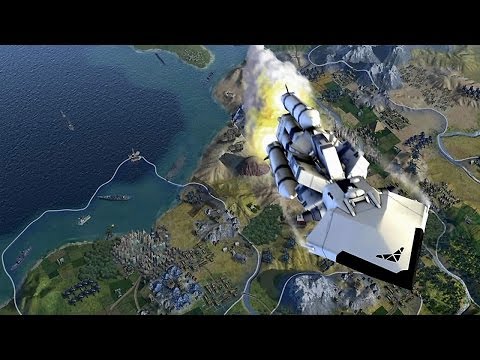 Civilization 5Civilization 5 is $29.99 on Steam on Nov 19, 2026 and $33.00 complete with both expansions, after a sale to that day at $7.49 and $16.80, and 18,916 people were playing it on Steam when we read the count, 16 years after release and more than Civilization 7 had. We rate it A tier at 92.5, half a point under S.
-
 Civilization 6Civilization 6 had 30,571 players on Steam when we read the count on Nov 15, 2026, 2.7 times Civilization 7's 11,260, ten years after release. It is back at its full $59.99 since a sale ended Nov 4, and got a Windows security hotfix on Nov 5. We rate it B tier at 86.5.
-
 Civilization Games RankedCivilization 4 is the best Civilization game by our rule, at 93.0 from its 94 on Metacritic and its 92% on Steam, read Nov 15, 2026. Civilization 5 is half a point behind, Civilization 7 is sixth at 65.0, and we think Civilization 4 with Beyond the Sword is the best of all.
-
 Civilization 4Civilization 4 with every expansion costs $29.99 on Steam and on GOG on Nov 19, 2026, after an 80% off sale at $5.99 that ended that day, and 2,172 people were playing Beyond the Sword on Steam when we read the count, 21 years after release. We rate it S tier at 93.0, first of the seven games, and we think Civilization 4, Beyond the Sword is still the best Civilization game.